


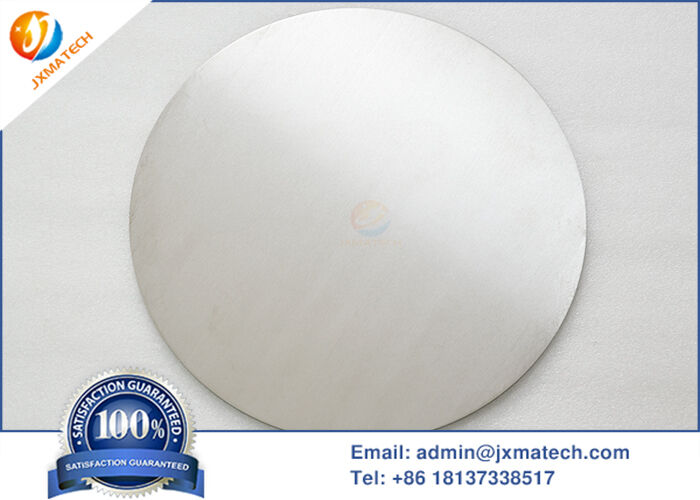
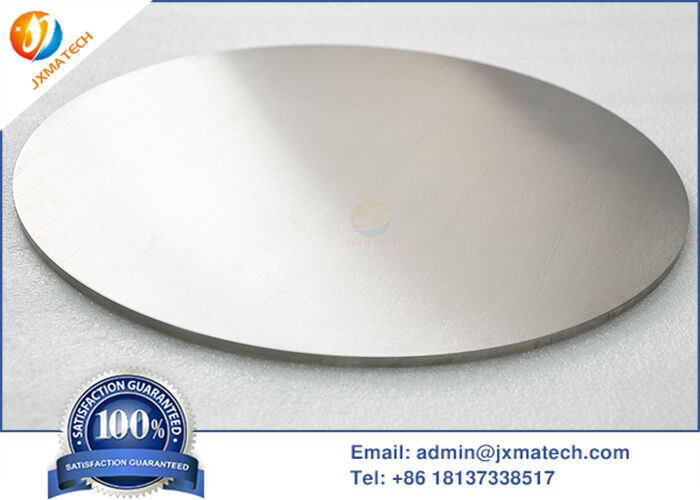
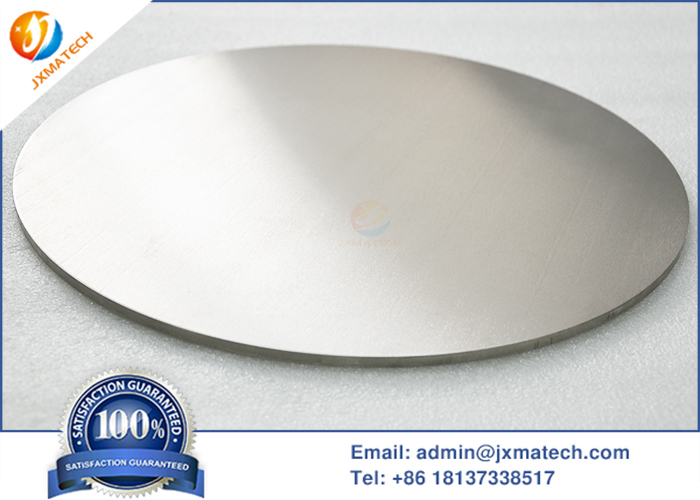

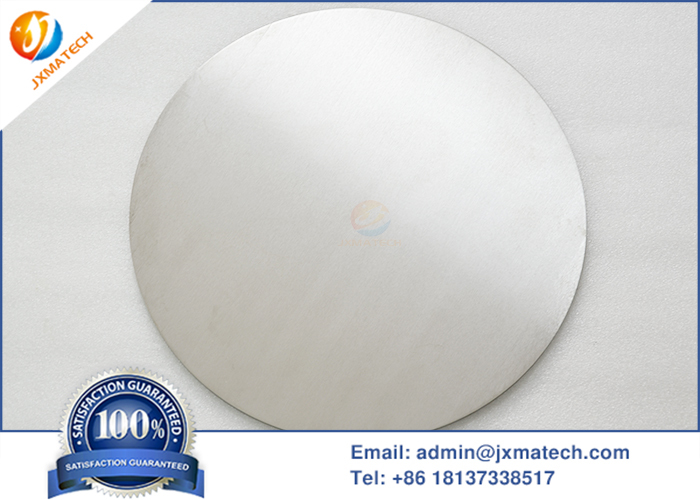
Stellite 6 Bar Alloy 6 Custom

|
Product Details:
|
|
| Place of Origin: | CHINA |
|---|---|
| Brand Name: | JX |
| Certification: | ISO9001 |
| Model Number: | Ni |
|
Payment & Shipping Terms:
|
|
| Minimum Order Quantity: | 1PCS |
| Packaging Details: | Fumigation-free plywood crates with shock-absorbing foam |
| Delivery Time: | 25-30DAYS |
| Payment Terms: | T/T, L/C, Western Union |
Product Description
Typically purified multiple times by electron beam melting (EBM), purity can reach 3N5 (99.95%) to 5N (99.999%). Extremely low oxygen, nitrogen, and hydrogen content (<50 ppm) ensures material stability during subsequent superconducting chamber manufacturing or high-temperature vacuum environments, preventing embrittlement.
Niobium surfaces spontaneously form a dense and stable Nb₂O₅ oxide film, which is inert against molten alkali metals, strong acids, and human fluids. This makes it an ideal disc substrate for chemical anti-corrosion linings, orthopedic/dental implants (Biomedical Implants), and electrolytic capacitor anodes.
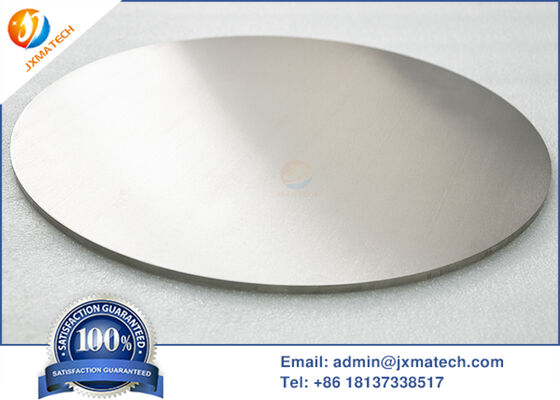
With a melting point as high as 2468°C, compared to refractory metals like tungsten and molybdenum, niobium offers better room-temperature ductility and cold workability. The disc shape facilitates stamping, spinning, CNC turning, and deep drawing forming, reducing manufacturing costs for complex components.
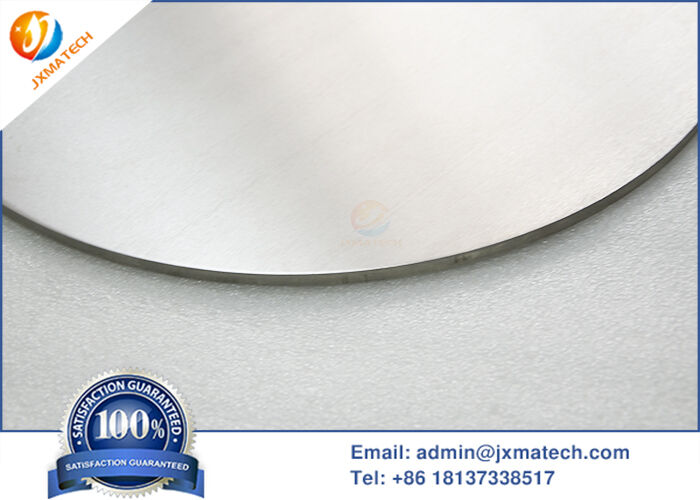
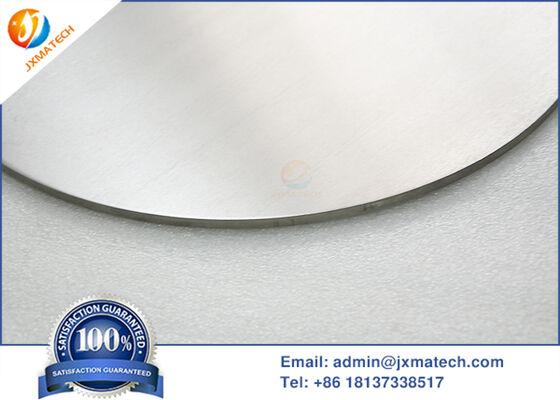
Niobium discs that have been precisely rolled and ground have thickness tolerances controlled within ±0.02 mm, with a surface roughness of Ra < 0.4 μm. This consistency is crucial for serving as sputtering target blanks or vacuum-sealed flange gaskets, reducing subsequent machining allowances.
Supports full-size customization from Φ10 mm laboratory samples to Φ500mm industrial-grade billets. Various surface conditions such as polished, pickled, and brushed can be provided to meet the diverse needs of R&D prototyping and mass production material preparation.
All official niobium discs come with ASTM B393 / GB/T 26058 compliance certificates and material certificates (COA/MTC), ensuring traceability of chemical composition, mechanical properties, and non-destructive testing (UT) data, meeting the stringent entry requirements of aerospace, nuclear industry, and semiconductor equipment customers.
|
Grade |
R04200/R04210/R04251 |
| Diameter | Φ5 mm - Φ400 mm |
| Thickness | 0.1 mm - 30mm |
| Tolerance reference | ±0.2 - 0.5 mm |
| Density | 8.57 g/cm³ |
| Surface | Cold-rolled; polished; mirror finish; pickled. |
| Hardness | 115-160 HV |
| Tensile Strength | 330-600MPa |
| Standard | ASTM B393 |
| Certificate | ISO 9001 |
Niobium Sheet Circle is the essential raw material for manufacturing Superconducting Cavities (SRF). These cavities are the core accelerating components in large-scale Particle Accelerators (e.g., colliders, free-electron lasers), leveraging niobium’s zero-resistance property at cryogenic temperatures to achieve high-gradient acceleration with minimal energy loss.
With a melting point of 2468°C and excellent high-temperature strength, niobium discs are widely used in Vacuum Furnaces and High-Temperature Furnaces. They are precision-machined into Heat Shields to reflect thermal radiation and improve temperature uniformity, or fabricated as Heating Elements that operate stably above 1800°C without contaminating the workpiece.
Niobium forms a dense, stable Nb₂O₅ oxide layer that provides exceptional corrosion resistance against concentrated acids, molten alkalis, and aggressive chlorides. ASTM B393 Niobium Discs serve as linings, tray plates, and sealing surfaces for Chemical Process Equipment, significantly extending service life and reducing downtime in harsh chemical environments compared to traditional alloys.
Niobium exhibits outstanding biocompatibility, non-toxicity, and bone integration capability, with an elastic modulus closer to human bone than titanium. High Purity Niobium Discs are used as blanks for orthopedic plates, spinal fusion cages, dental implant abutments, and cranial repair plates, making them ideal for Medical Implants and bone replacement applications with no risk of metal ion release.
Niobium alloy discs (e.g., C-103, Nb521) are critical high-temperature structural materials in Aerospace propulsion systems. They are manufactured into thrust chamber bodies, nozzle extensions, and attitude control nozzles for liquid rocket engines, capable of withstanding extreme heat and gas erosion above 1600°C while maintaining high specific strength and compatibility with oxidation-resistant coatings.
(1) Raw material preparation: High-purity niobium ingots meeting ASTM B392 standards are selected for pretreatment to remove surface oxide scale and impurities. The substrate is purified through mechanical grinding, pickling passivation, and vacuum degassing.
(2) Rolling: Using a combination of Hot Rolling and Cold Rolling processes, hot rolling refines the cast-state structure of niobium ingots and increases material density; Cold rolling precisely controls sheet thickness tolerances, flatness, and surface finish, ensuring disc dimensional accuracy and surface quality.
(3) Vacuum Annealing: Heat treatment in a high-vacuum environment can eliminate residual cold rolling stress, effectively restore material ductility and toughness, while precisely adjusting grain size and structure to achieve uniform and dense grains.
(4) Precision forming: Disc forming can be completed through three mainstream methods—Laser Cutting / Waterjet Cutting / Stamping (Punching). Disc forming can be flexibly selected based on disc dimension accuracy, thickness, surface requirements, and batch requirements, adapting to different industrial application scenarios.
(5) Finish Quality Control: Grain Size / Grain Structure are the key physical indicators that determine the success or failure of subsequent Deep Drawing (Forming) processing for customers. Metallographic testing must strictly screen for grain size grades to ensure overall grain uniformity meets standards.
(6) Post-processing: Sequentially deburring, leveling, surface polishing, pickling passivation, vacuum cleaning, and other post-processing steps. Ultimately, dimensional tolerance inspection, surface quality inspection, mechanical property testing, and metallographic grain testing are conducted. Delivery is carried out after meeting all standards.
Q: What are the differences between niobium discs, titanium discs, and zirconium discs? How to choose a model?
A: The three are mainly suitable for different working conditions: niobium disc melting point of 2468°C, high temperature resistance, strong corrosion resistance, excellent coating uniformity, suitable for vacuum sputtering and high-temperature precision operations; Titanium discs focus on lightweight design and are suitable for corrosion protection in conventional aviation and civil applications; Zirconium discs focus on nuclear radiation resistance and are mostly used in nuclear power scenarios. Niobium discs are preferably chosen for high-purity coatings, high-temperature vacuum, and highly corrosive conditions.
Q: What is the standard size range? Does it support custom non-standard sizes?
A: Standard sizes: diameter 5 mm- 480 mm, thickness 0.1 mm- 50 mm, meeting general industrial needs. Supports full-size non-standard customization, capable of ultra-thin, large-diameter, and perforated-shaped machining, with dimensional tolerances controllable to ±0.01 mm, suitable for precision equipment and experimental needs.
Q: What is an annealed niobium disc? What is the difference between annealed and unannealed versions?
A: Annealed niobium discs are finished products processed by vacuum high-temperature annealing, making them mainstream overseas procurement models. They eliminate internal processing stresses, have uniform material quality, high flatness, and are not easily deformed or cracked, suitable for high-precision sputtering and precise assembly. Unannealed models have poor toughness and are prone to deformation, and are only suitable for low-precision scenarios such as ordinary mechanical gaskets.
Q: Can you customize surface treatments, drills, and chamfers?
A: Supports comprehensive customization: surface treatments (mirror polishing, sandblasting, pickling), special-shaped processing (drilling, chamfering, grooving), process customization (vacuum annealing, solution treatment), as well as custom special tolerances and exclusive purity ratios, providing drawing confirmation and process traceability services.
Q: What is the minimum order quantity? Are bulk foreign trade orders supported?
A: We allow orders of just one sample, as well as handling large-scale foreign trade orders. We have stock of common specifications in stock, enabling fast delivery; for bulk orders, production can be scheduled according to requirements. We offer global sea and air shipping services, provide complete customs documentation and quality inspection reports, and are well-suited for B2B procurement activities overseas.
Q: What parameters are required when purchasing Nb Disc? How can I get an accurate quote?
A: To obtain an accurate quote, it is sufficient to confirm four key parameters: purity grade, dimensions and tolerances, processing method, and quantity required. Providing the relevant manufacturing drawings will enable us to provide you with a free and accurate quote, without any hidden costs.
Enter Your Message

JINXING MATECH is an expert provider on the metal solution. Especially on the products such as Tungsten Alloy , Tungsten copper , Titanium , Zirconium, Vanadium, Hafnium, Sputtering target , Nobel metal etc,
| JINXING MATECH CO LTD |
| NO.57 KEXUEDADAO ROAD |
| 86-371-18137338517 |
| admin@jxmatech.com |